The US war on Iran and the subsequent closure of the Hormuz Strait is sending oil, LNG and fertiliser prices into an uncontrollable spike that is likely to last at least as long as hostilities continue. A country's energy mix and main source of energy imports affect its vulnerability to the Gulf crisis and shows the value of a rapid energy transition in a real-world shock scenario. Depending on the country, renewable electricity shields up to 30% of total energy exposure. Every 10% of renewable electricity generation share translates to 0.25% lower shock impacts (measured as percentage of GDP) and can amount to the difference between a mild slowdown and a serious recession. In addition, this analysis underlines the case for all lesser-developed economies to abandon planned fossil-based infrastructure and instead leapfrog to the cheaper solar/wind plus battery option.
Energy & Climate
Iran Oil Price Shock: The Renewable Energy Shield
−3.15%
Expected global GDP shock from the Iran conflict, prolonged scenario
+0.15pp
GDP growth loss avoided by Uruguay's clean energy transition (electricity channel)
$76/MWh
Solar + battery storage, vs $175/MWh for new gas peaker power
More Research & Analysis
Discover more research and analysis on sustainable competitiveness
Policy & Competitiveness
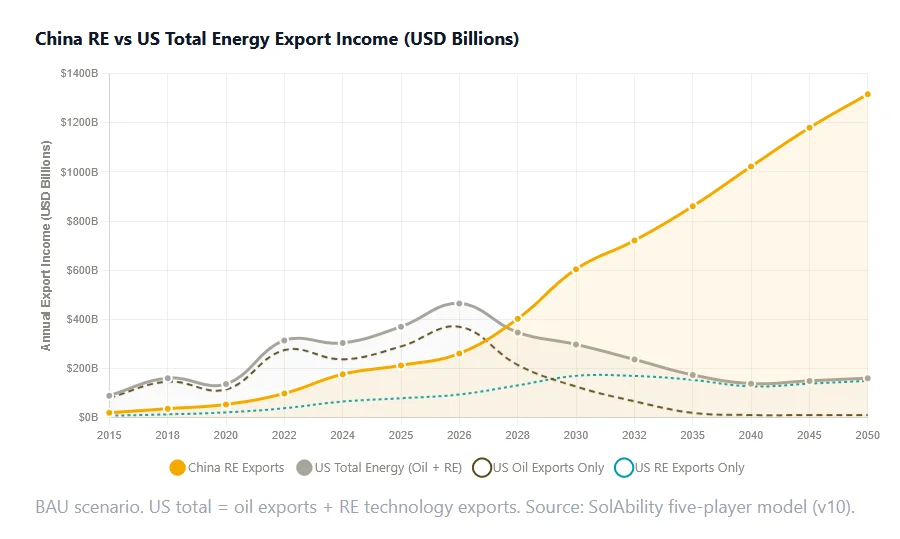
Drill Baby Drill vs Electrification: The US-China Energy Competitiveness Gap
GSCI data reveals a widening competitiveness gap between the US and China in renewable energy manufacturing. China overtook the US in high-tech manufacturing in 2015 and overall competitiveness in 2022, and now leads by widening margins across every industrial indicator.
May 8, 2026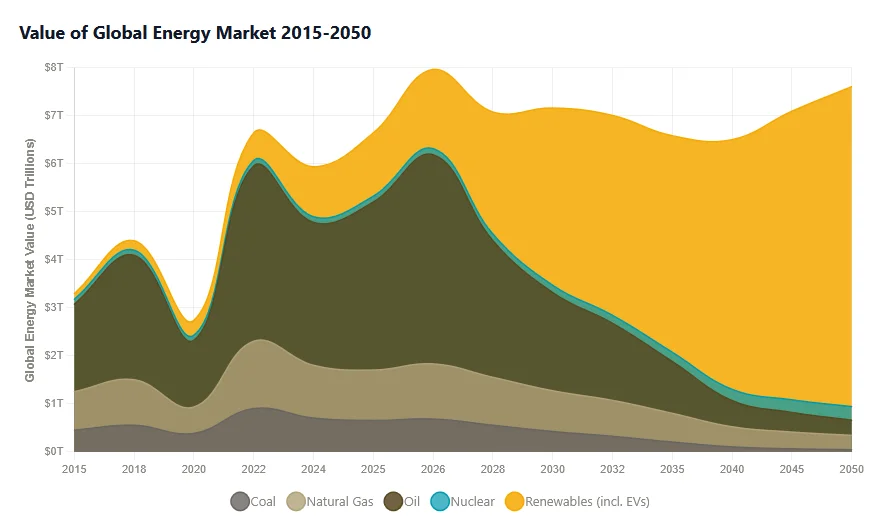
Energy & Climate
The Global Energy Market Outlook: From Fossil Fuels to a $6-8 Trillion Renewable Economy
The $6-8 trillion global energy market is undergoing structural transformation. Renewable energy costs have collapsed; fossil fuels are becoming uncompetitive. This is the story of winners, losers, and the economic shift defining the next half-century.
May 8, 2026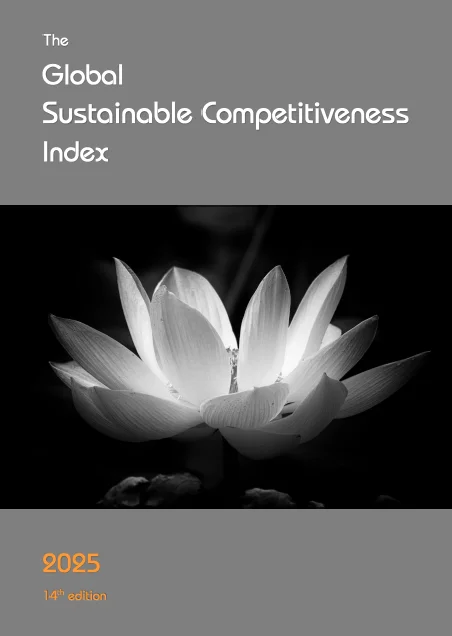
GSCI Reports
The Global Sustainable Competitiveness Index 2025
Comprehensive framework for evaluating country-level ESG performance across 192 nations. Finland tops the rankings while China continues to outperform the US.
December 16, 2025