State of Social Capital 2024
Key Insights from the Social Capital Index 2024
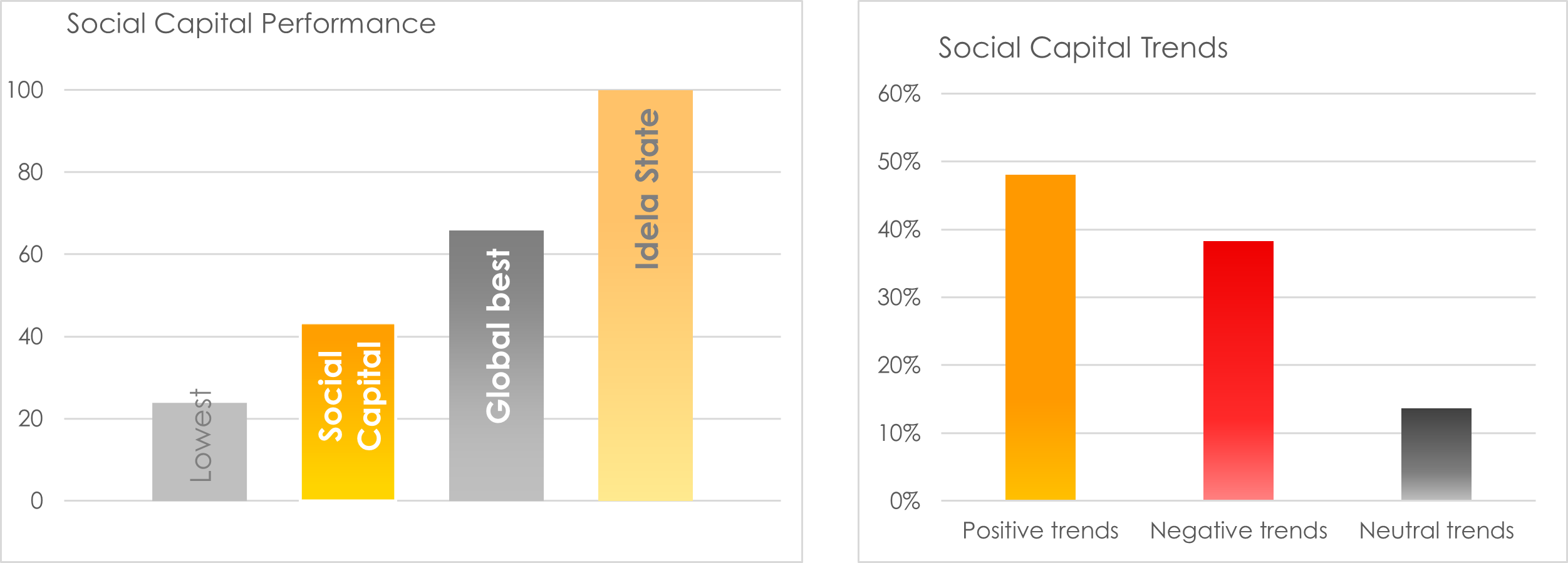
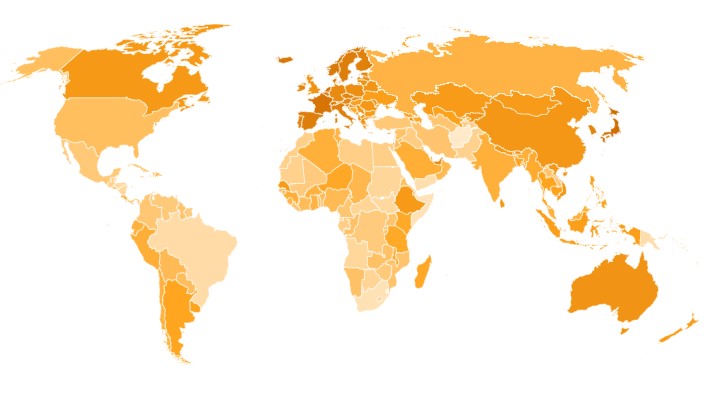
- Top Performers: Japan ranks first, followed by the Netherlands, France, Iceland, and Norway, with the remaining Scandinavian nations also in the top 10
- The top 30 is largely dominated by Western European countries and the Baltics, with Japan (1), South Korea (17), and the United Arab Emirates (25) as notable exceptions
- The United States ranks 118th due to high crime rates, limited healthcare access, and increasing inequality
- China ranks 43rd, India 89th, Nigeria 109th, and Brazil 179th
- In South America, Uruguay (68), Argentina (71), and Peru (86) are the highest-ranked countries, while in Africa, Senegal (56), Madagascar (76), and Kenya (78) lead
- Many African nations, particularly in and south of the Sahel region, rank at the bottom of the index. This is attributed to challenges such as inadequate healthcare, high child mortality, restricted freedoms, and unstable human rights conditions
Understanding Social Capital
Social Capital represents the fabric that holds societies together. It encompasses the networks, norms, and trust that enable people to work together effectively. Unlike physical or financial capital, Social Capital is built through relationships, shared values, and institutional frameworks that promote cooperation and mutual benefit.
Key Components of Social Capital:
- Healthcare Access: Universal, affordable healthcare systems that ensure population well-being and productivity
- Income Equality: Fair distribution of wealth and opportunities that reduces social tensions and crime
- Safety and Security: Low crime rates and freedom from violence that allow communities to thrive
- Civil Liberties: Freedom of expression, assembly, and belief that enable democratic participation
- Social Cohesion: Trust between different groups and shared commitment to common goals
- Demographic Balance: Sustainable population structures that support intergenerational equity
Regional Analysis
East Asia: Japan's Social Capital Leadership
Japan's top ranking reflects decades of investment in social cohesion, universal healthcare, and low crime rates. Despite facing demographic challenges with an aging population, Japan maintains exceptional social stability through strong community bonds and comprehensive social safety nets. South Korea (17) also demonstrates high Social Capital, combining rapid economic development with investments in healthcare and education (see Intellectual Capital Index).
Western Europe: The Nordic Model
The Netherlands, France, Iceland, Norway, and other Scandinavian nations demonstrate that comprehensive welfare states can create high levels of Social Capital. These countries combine economic prosperity with low inequality, universal healthcare, strong workers' rights, and robust civil liberties. Their governance systems (explore Governance Index) create environments where social trust and cooperation flourish.
United States: The Inequality Challenge
The United States' 118th ranking reveals the social costs of high inequality, limited healthcare access, and elevated crime rates. Despite being the world's largest economy, the US struggles with social cohesion due to growing wealth gaps, lack of universal healthcare, and high incarceration rates. These challenges demonstrate that economic wealth alone does not guarantee Social Capital—distribution and access matter profoundly.
Emerging Economies: Diverse Pathways
The UAE (25) shows that intentional social policies can build Social Capital relatively quickly. China (43) reflects mixed outcomes—improving healthcare access alongside concerns about civil liberties. India (89) and Nigeria (109) face challenges with healthcare infrastructure, inequality, and social tensions. Brazil (179) struggles with extreme inequality, high crime rates, and healthcare access issues despite significant natural and human resources.
Africa: The Development Gap
African nations face significant Social Capital challenges, though with notable exceptions. Senegal (56), Madagascar (76), and Kenya (78) demonstrate that progress is possible through investments in healthcare, education, and governance. Many Sahel and sub-Saharan nations rank lower due to inadequate healthcare, high child mortality, conflict, and restricted freedoms. Improving Social Capital in these regions requires addressing basic human needs alongside governance reforms.
The Social Capital World Map 2024
Why Social Capital Matters for Sustainability
Social Capital is foundational to sustainable development because it determines whether societies can cooperate to address collective challenges. High Social Capital enables:
- Environmental Protection: Communities with high trust and cohesion are more likely to support environmental regulations and sustainable resource management
- Economic Resilience: Stable societies attract investment and enable long-term planning, creating conditions for sustainable economic growth
- Innovation: Social trust reduces transaction costs and enables the collaboration necessary for innovation and intellectual capital development
- Democratic Governance: Strong Social Capital supports effective governance institutions and peaceful conflict resolution
- Health and Well-being: Social connections improve mental and physical health, reducing healthcare costs and increasing productivity
Good governance isn't just about policies—it's about creating environments where people and the planet thrive.
Countries that invest in healthcare, reduce inequality, protect civil liberties, and foster social trust create the foundation for sustainable prosperity that benefits all citizens across generations.
Building Social Capital: Policy Pathways
Countries looking to strengthen their Social Capital should consider:
- Universal Healthcare: Ensuring affordable, quality healthcare access for all citizens builds trust and improves population well-being
- Progressive Taxation: Reducing inequality through fair taxation and social safety nets decreases crime and increases social cohesion
- Education Investment: Quality education from early childhood through university creates opportunity and social mobility
- Civil Rights Protection: Guaranteeing freedom of expression, assembly, and belief enables democratic participation and social trust
- Community Investment: Supporting local organizations, cultural institutions, and public spaces that bring people together
- Conflict Prevention: Addressing the root causes of social tensions before they escalate into violence
The Economic Returns of Social Capital
Research consistently shows that Social Capital generates significant economic returns. Societies with high trust and cooperation experience:
- Lower transaction costs in business and governance
- Higher rates of entrepreneurship and innovation
- Greater resilience during economic shocks
- More effective public institutions and service delivery
- Reduced costs of crime, conflict, and social dysfunction
- Better health outcomes and lower healthcare costs
The data shows that investing in Social Capital is not just morally right—it's economically rational. Countries that prioritize social cohesion, equality, and well-being create the conditions for sustainable prosperity.
Explore Further
For more detailed analysis and country-specific Social Capital data, visit the interactive Global Sustainable Competitiveness Index or download the full GSCI 2024 Report.