The quality and availability of education in the past are strong predictors of current R&D and innovation capacities, while today's educational performance shapes future innovation potential. Robust and extensive R&D activities form the foundation for developing value-added technologies and services. Consequently, educational performance indicators are critical for assessing a nation's long-term ability to sustain innovation and remain competitive.
State of Intellectual Capital 2024
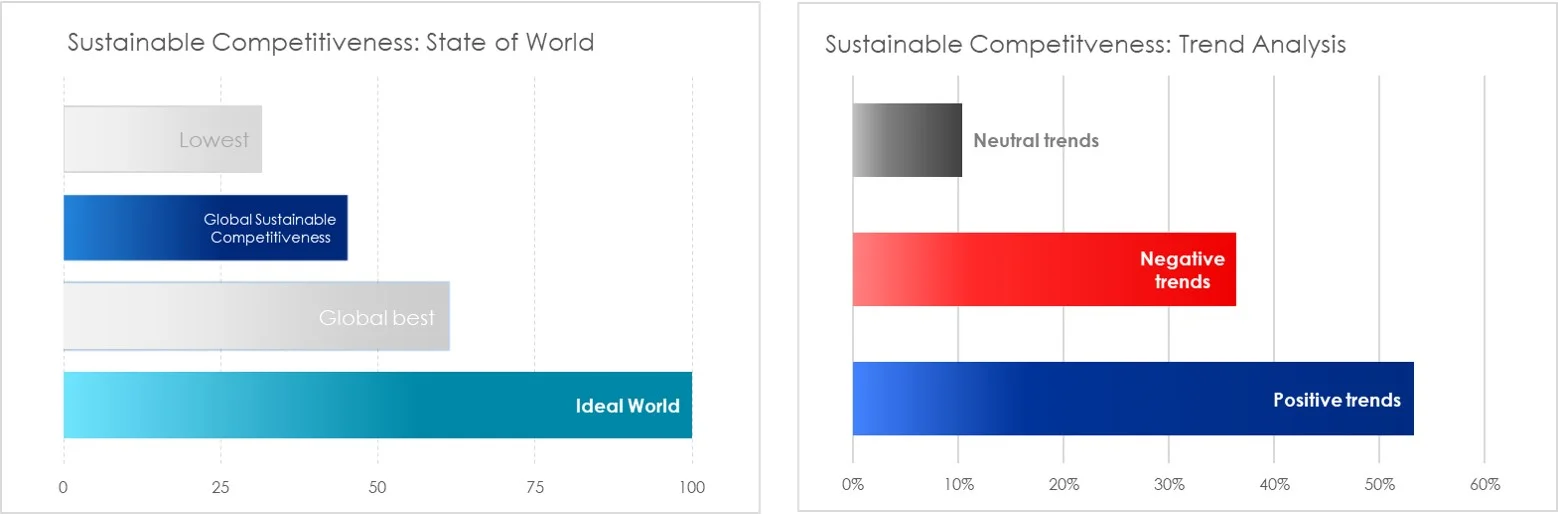
Key Insights from the Intellectual Capital Index 2024
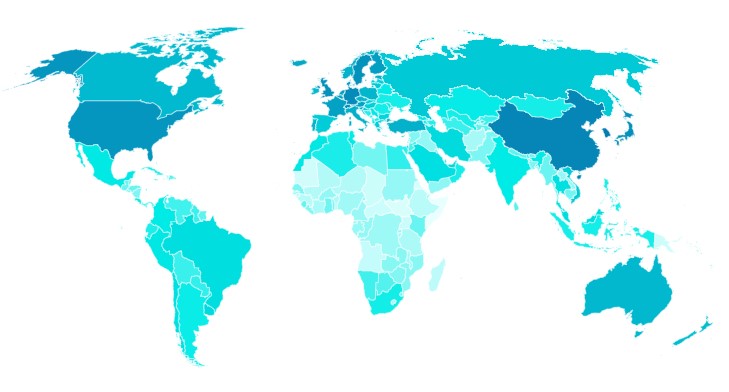
- North-East Asian countries (South Korea, China, Japan, Singapore) lead the intellectual capital sub-index of the GSCI, reflecting their dominance in technology advancement
- South Korea retains the top position in innovation, significantly ahead of other nations
- China ranks second, highlighting its rapid technological progress and the impact of state-led investments in education
- Germany (4th), the UK (6th), and the US (8th) also perform strongly
- Scandinavian nations and Israel rank within the top 20
- Among emerging economies, Brazil is ranked 49th, India 62nd, and Nigeria 169th
- On the African continent, Morocco (57th), Tunisia (68th), and South Africa (76th) are the highest-ranked nations
- Most African countries, however, remain underperforming in intellectual capital, raising concerns about persistent poverty traps
Understanding Intellectual Capital
Intellectual Capital represents a nation's capacity to create, absorb, and apply knowledge. It encompasses both the stock of knowledge embodied in the population through education and the flow of new knowledge generated through research and innovation. Unlike other forms of capital, Intellectual Capital compounds over time—well-educated populations train the next generation, and research breakthroughs enable further innovation.
Key Components of Intellectual Capital:
- Educational Quality: Quality of primary, secondary, and tertiary education systems measured by student performance and educational outcomes
- Educational Access: Enrollment rates and completion rates across all education levels
- R&D Investment: Public and private expenditure on research and development as percentage of GDP
- Innovation Output: Patents, scientific publications, and technological advancement indicators
- Research Infrastructure: Universities, research institutions, and collaboration networks that enable knowledge creation
- Human Capital Quality: Skills, competencies, and adaptability of the workforce
Regional Analysis: The Global Innovation Landscape
East Asia: The Innovation Powerhouse
South Korea's top ranking reflects decades of strategic investment in education and R&D. The country dedicates over 4% of GDP to research and development—among the highest rates globally—and has built world-class universities and research institutions. This investment has positioned South Korea as a leader in semiconductors, telecommunications, and advanced manufacturing.
China's second-place ranking represents a remarkable transformation. State-led investments in education have dramatically increased university enrollment and research capacity. China now produces more scientific publications and patents than any other nation, though concerns about innovation quality and academic freedom persist. The combination of massive scale, government support, and improving education quality makes China a formidable innovation competitor.
Japan and Singapore also rank highly, leveraging strong education systems and R&D infrastructure. Japan's research excellence spans from automotive engineering to robotics, while Singapore has built a knowledge economy despite limited natural resources (see Natural Capital Index).
Western Europe and North America: Traditional Innovation Leaders
Germany (4th), the UK (6th), and the US (8th) maintain strong positions but face challenges. Germany's engineering excellence and dual education system (combining academic and vocational training) support its advanced manufacturing sector. The UK's world-class universities drive research output despite Brexit-related challenges to research collaboration.
The United States' 8th ranking may seem surprising given its innovation leadership in technology and biotechnology. However, the ranking reflects educational challenges including high inequality in school quality, relatively low performance in international student assessments, and high costs of higher education that limit access. US innovation strength comes from elite universities and research institutions, but the broader education system underperforms relative to investment levels.
Scandinavian nations perform strongly through comprehensive, high-quality education systems that emphasize equality of access. Israel ranks highly due to exceptional R&D intensity (over 5% of GDP) and a culture that encourages entrepreneurship and innovation. Strong governance systems in these countries support sustained investment in education and research.
Emerging Economies: The Innovation Gap
Brazil (49th), India (62nd), and Nigeria (169th) face significant challenges in building Intellectual Capital. Brazil struggles with educational inequality—elite private schools and universities coexist with underfunded public systems. India's challenge is scale: while producing world-class engineers and scientists through premier institutions, the broader education system struggles to provide quality education to its massive population.
Nigeria and most African nations (except Morocco, Tunisia, and South Africa) rank at the bottom due to limited educational access, low quality, and minimal R&D investment. This creates a poverty trap: without education and innovation, economic growth remains limited, which constrains resources for education investment. Breaking this cycle requires sustained commitment despite limited resources.
The Intellectual Capital World Map 2024
Why Intellectual Capital Matters for Sustainability
Intellectual Capital is the engine of sustainable development. Education and innovation enable societies to:
- Develop Clean Technologies: Research and innovation are essential for creating renewable energy, sustainable agriculture, and circular economy solutions that protect Natural Capital
- Improve Resource Efficiency: Innovation enables doing more with less, reducing environmental impact while maintaining or improving living standards
- Build High-Value Economies: Knowledge-intensive industries generate prosperity without depleting natural resources, supporting sustainable economic growth
- Enhance Social Mobility: Quality education provides opportunities regardless of background, strengthening Social Capital and reducing inequality
- Enable Adaptive Capacity: Educated populations can respond to climate change, technological disruption, and other challenges more effectively
- Support Democratic Governance: Education enables informed civic participation and supports effective governance institutions
Education is the foundation of sustainable competitiveness
Countries that invest in universal, high-quality education and robust research infrastructure create the human capital necessary to navigate the challenges of the 21st century—from climate change to technological disruption.
Building Intellectual Capital: Policy Pathways
Countries looking to strengthen their Intellectual Capital should prioritize:
- Universal Quality Education: Ensuring all children access high-quality primary and secondary education, regardless of family income or location
- Teacher Quality: Investing in teacher training, compensation, and professional development to attract and retain talented educators
- STEM Education: Strengthening science, technology, engineering, and mathematics education at all levels
- Higher Education Access: Making university education affordable and accessible while maintaining quality standards
- R&D Investment: Committing sustained public funding to basic research and creating incentives for private R&D investment
- Research Infrastructure: Building universities, laboratories, and research networks that enable world-class research
- International Collaboration: Participating in global research networks and enabling knowledge exchange across borders
- Innovation Ecosystems: Creating conditions that enable research to translate into commercial applications and societal benefits
The Economic Returns of Education and Innovation
Investment in Intellectual Capital generates exceptional returns:
- Each additional year of schooling increases individual earnings by approximately 10% on average
- Countries with higher educational attainment grow faster and are more resilient to economic shocks
- R&D investment has multiplier effects—each dollar invested generates additional economic activity through innovation and productivity gains
- Knowledge-intensive industries create high-wage employment and generate tax revenue that funds public services
- Innovation spillovers benefit entire economies—one breakthrough can transform multiple sectors
- Educated populations are healthier, live longer, and participate more actively in civic life
The Innovation Imperative
The challenges facing humanity—climate change, resource scarcity, aging populations, pandemic preparedness—cannot be solved without innovation. The countries leading the Intellectual Capital Index are best positioned to develop the technologies and systems needed for a sustainable future.
However, innovation must be democratized. The concentration of research capacity in a few countries creates dependencies and limits the diversity of approaches to global challenges. Strengthening education and research capacity globally—particularly in Africa and other underperforming regions—is essential for sustainable development worldwide.
The data shows that building Intellectual Capital requires long-term commitment. South Korea's innovation leadership stems from education reforms begun in the 1960s. China's rise reflects three decades of sustained investment. Countries looking to improve must commit to multi-decade efforts, but the rewards—sustainable prosperity, resilience, and global competitiveness—justify the investment.
Explore Further
For more detailed analysis and country-specific Intellectual Capital data, visit the interactive Global Sustainable Competitiveness Index or download the full GSCI 2024 Report.