Governance defines the environment the society – individual and businesses – operate in. The Governance Index of the Global Sustainable Competitiveness Index therefore evaluates the outcomes of regulatory frameworks and infrastructure—not government systems or policies themselves. It assesses how well a country's governance enables natural, social, and intellectual capital to thrive sustainably.
Global Governance Performance 2024
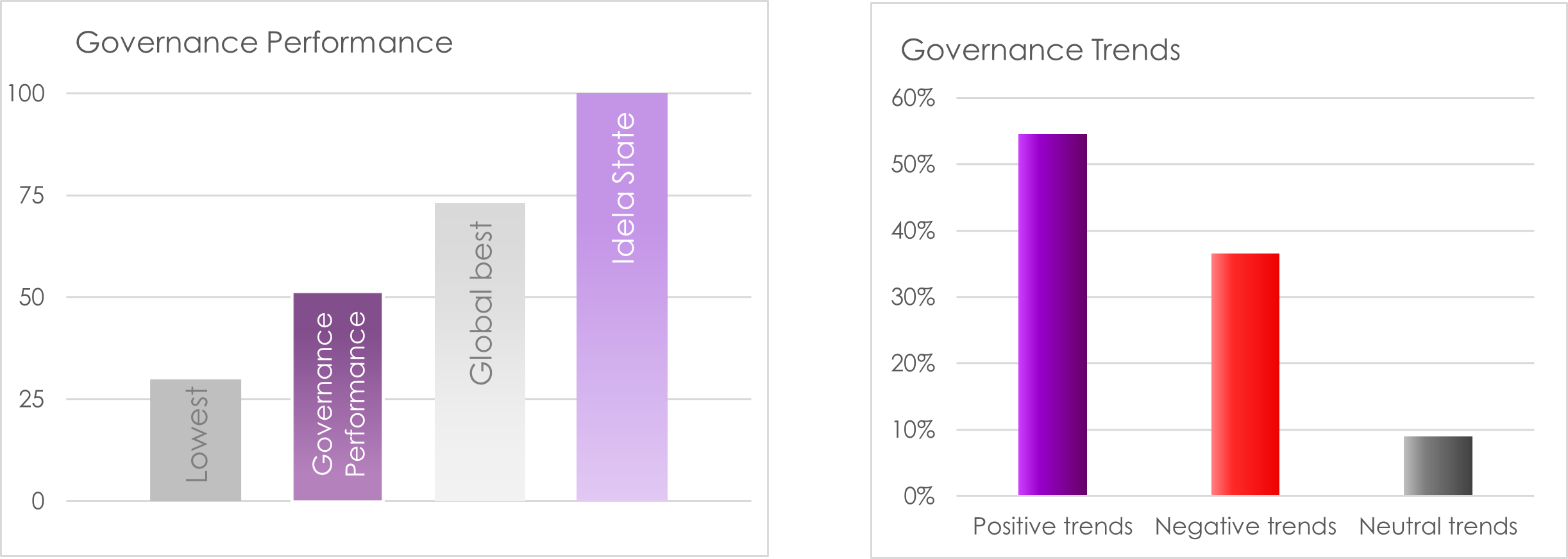
Key insights from the 2024 Governance Index
- Western European nations dominate the top spots, showcasing strong regulatory and infrastructure frameworks
- Non-European standouts in the top 30 include New Zealand (9), Korea (13), Australia (15), Japan (17), and Uruguay (29)
- Top-ranked countries: Sweden, Denmark, Finland, and Estonia
- Other rankings: Germany (6), France (12), UK (26), China (61), US (62)
- Developing nations: Brazil (70), India (118), and Nigeria (119)
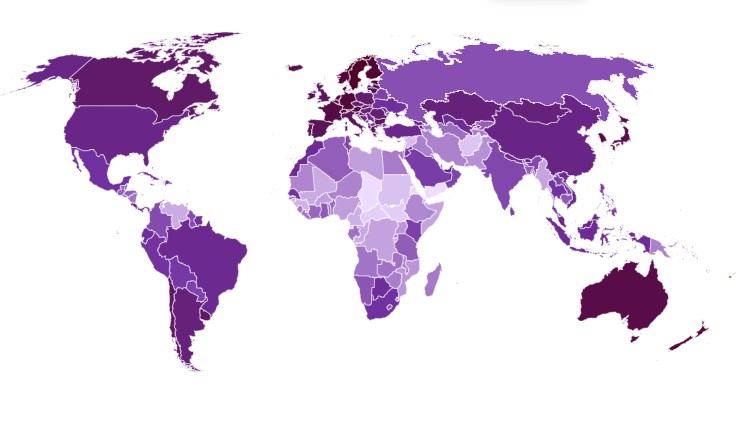
- The map highlights a notable North-South gap: African nations generally rank lower, with the exception of South Africa
What the Governance Index Measures
The Governance Performance Index evaluates how effectively a country's governance structures create an enabling environment for sustainable development. Unlike indices that focus on political systems or democratic processes, this index measures tangible outcomes across multiple dimensions:
- Infrastructure Quality: Physical and digital infrastructure that enables economic activity and quality of life
- Regulatory Framework: Effectiveness of regulations in promoting sustainable business practices and protecting citizens
- Resource Allocation: How efficiently governments allocate public resources to maximize societal benefit
- Corruption Control: Measures of transparency and accountability in public institutions
- Fiscal Sustainability: Long-term fiscal health and responsible debt management
Regional Performance Patterns
Western Europe: Leadership in Governance
Western European nations continue to demonstrate exceptional governance performance. The Nordic countries—Sweden, Denmark, Finland—consistently rank at the top, reflecting their long-standing commitment to transparency, rule of law, and effective public institutions. These countries have created regulatory environments that balance economic dynamism with social protection and environmental sustainability.
Asia-Pacific: Diverse Outcomes
The Asia-Pacific region shows remarkable diversity in governance outcomes. New Zealand (9), Korea (13), and Australia (15) demonstrate that strong governance is achievable across different political and cultural contexts. Japan (17) maintains its position as a well-governed economy, though facing challenges from demographic pressures. In contrast, China (61) shows the complexity of governance assessment—strong infrastructure and economic management are offset by concerns about transparency and rule of law.
The Americas: A Mixed Picture
The United States ranks 62nd, reflecting ongoing challenges in infrastructure quality, fiscal sustainability, and political polarization that hamper effective governance. Uruguay (29) stands out in Latin America, demonstrating that strong governance is achievable regardless of economic scale. Brazil (70) faces governance challenges that limit its ability to fully leverage its natural and human capital.
Africa: The Governance Gap
African nations face significant governance challenges, with most ranking in the lower half of the index. Nigeria (119) and other resource-rich countries struggle with corruption and resource allocation despite significant natural wealth. South Africa represents a notable exception, showing that governance improvements are possible but require sustained political will and institutional reform.
The Governance World Map 2024
Why Governance Matters for Sustainability
Governance creates the foundation upon which all other forms of capital depend. Strong governance enables:
- Natural Capital Protection: Effective environmental regulations and enforcement prevent resource depletion and environmental degradation (learn more about Natural Capital)
- Social Capital Development: Fair institutions and rule of law build trust and social cohesion (explore Social Capital)
- Intellectual Capital Growth: Investment in education and research infrastructure drives innovation (see Intellectual Capital Index)
- Economic Sustainability: Stable regulatory frameworks encourage long-term investment and sustainable business practices
Good governance isn't just about policies—it's about creating environments where people and the planet thrive.
Countries that invest in transparent institutions, quality infrastructure, and effective regulation create the conditions for sustainable prosperity that benefits all citizens, not just a privileged few.
The Path Forward
Improving governance performance requires sustained effort across multiple dimensions. Countries looking to improve their governance rankings should focus on:
- Building transparent and accountable institutions that resist corruption
- Investing in physical and digital infrastructure that enables economic opportunity
- Creating regulatory frameworks that balance economic growth with social and environmental protection
- Ensuring fiscal sustainability through responsible debt management and efficient resource allocation
- Fostering political stability and peaceful transitions of power
The data shows that good governance is achievable at different income levels and across diverse political systems. What matters is the commitment to building effective institutions and the political will to maintain them over time.
Explore Further
For more detailed analysis and country-specific governance data, visit the interactive Global Sustainable Competitiveness Index or download the full GSCI 2024 Report.